How to Plan Your Luggage for a China High-Speed Rail Day
A China high-speed rail day can feel very smooth when luggage is planned well. The train itself is usually efficient, but travelers still need to pass through the station entrance, security, ticket and passport checks, waiting areas, gates, platforms, carriage aisles, and arrival exits. A suitcase that feels fine in a hotel room can become awkward when the group is moving through all of those steps.
The goal is not to travel with almost nothing. The goal is to make each bag easy enough to move, identify, lift, and manage during the day. For first-time visitors, that small difference can turn a rail transfer from a stressful moving puzzle into a predictable travel day.
Start with the station, not just the train
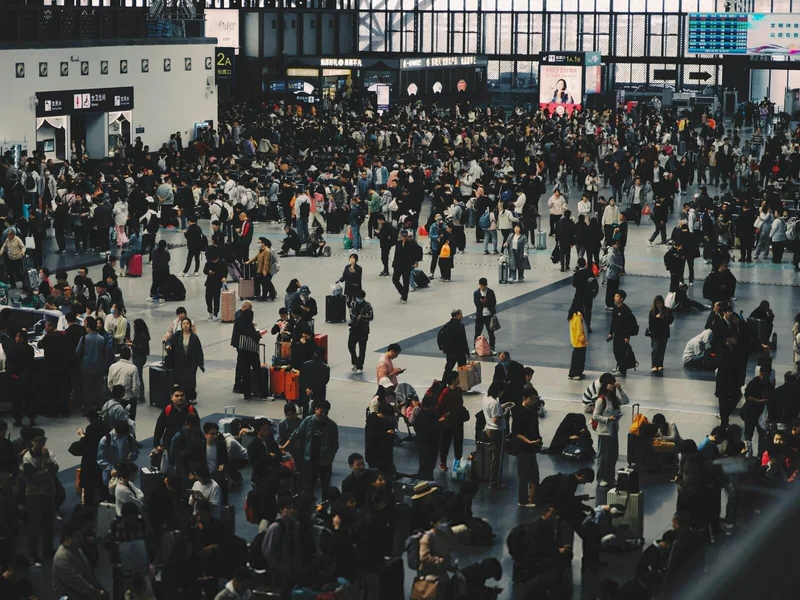
Many travelers think mostly about the train ride. In practice, the station often decides whether the day feels easy or heavy. Large railway stations in China can include multiple entrances, security channels, ticket gates, waiting halls, escalators, lifts, platform access points, and taxi or ride-hailing areas after arrival.
Before packing, assume that every bag may need to move across a large indoor space. If a suitcase is too heavy to lift briefly, too wide for a crowded aisle, or difficult to roll over uneven pavement outside the station, it may slow down the whole group. This is especially true when traveling with children, older travelers, or several large cases.
For a fuller picture of what station movement can involve, Jiangmi Travel's guide to large railway stations in China is a useful companion to read before the first rail day.
Use one main suitcase plus one useful small bag
A practical rail-day setup is often one main suitcase and one small personal bag per traveler. The suitcase holds clothing and larger items. The smaller bag holds the things that may be needed before reaching the next hotel: passport, phone, power bank, tickets or booking notes, medicine, wallet, snacks, and a light weather item.
This matters because luggage storage and seat access are separate problems. Once a suitcase is placed on a rack or at the carriage end, travelers should not need to keep opening it. The small bag should carry everything needed during the next few hours.
We covered the personal-bag side in more detail in what to keep in your day bag during a China trip. For rail days, that advice becomes even more important because passports, phone power, and hotel address details may be needed at several different points.
Keep passport access separate from suitcase access
International travelers should not bury passports inside checked-style luggage on a rail day. Passport information may be needed when entering the station, confirming tickets, passing checks, or handling unexpected questions. The passport should be secure, but still easy to reach without opening a large case on the station floor.
A zipped inner pocket, document pouch, or secure section of a small bag usually works better than a suitcase compartment. If traveling as a couple, family, or small group, each traveler should know where their own document is. One person can help coordinate, but one person should not be the only person who understands where every passport is kept.
Pack for the carriage aisle
Train stations are not the only place where luggage size matters. Boarding can involve moving through a carriage aisle while other passengers are finding seats, placing bags, and checking ticket information. A bag that is too bulky can make that moment awkward.
Soft outer pockets, loose straps, oversized shopping bags, and unstable stacked items can catch on seats or other bags. Before leaving the hotel, close all pockets, tighten straps, and avoid attaching too many small items to the suitcase handle. It is better to have fewer separate pieces than a tower of loosely balanced bags.
For travelers who want more specific rail-luggage advice, the main-site guide on luggage tips for China high-speed rail travelers goes deeper into station security, boarding, storage, transfers, and realistic packing choices.
Do not plan a full sightseeing day around large luggage
A rail transfer day can still include a meal, a short walk, or a light activity, but it should not be treated like a normal sightseeing day if the group is carrying large luggage. The more luggage the group has, the more carefully the day should be paced.
The best plan is often simple: check out, leave enough time for the station, take the train, transfer to the next hotel, settle the luggage, and then decide whether the evening has room for a relaxed activity. Trying to squeeze a major attraction between checkout and a train departure often creates pressure that is not worth the small gain.
This connects with our earlier note on building buffer time into a China itinerary. Buffer time is not empty time on rail days. It is what protects the group from station distance, queues, rain, traffic to the station, or a slower-than-expected checkout.
Make arrival easier before departure
Rail-day planning should include what happens after arrival. Travelers may feel relieved once the train reaches the destination, but the day is not finished until the group exits the station, finds the correct pickup point or taxi area, reaches the hotel, and checks in.
Save the hotel name and address in Chinese, keep the next hotel phone number easy to find, and know whether someone is meeting the group. If a driver or local support contact is involved, the meeting point should be clear before boarding the train. It is much easier to confirm this while still calm at the previous hotel than while standing outside a large arrival station with luggage.
Our post on China high-speed rail for first-time visitors also explains why travelers should confirm the exact station name, ticket details, and after-arrival plan before travel day.
Separate valuables from convenience items
Not everything in a small bag has the same importance. Passports, payment backup, medicine, and phones should be more secure than tissues, snacks, charging cables, or a water bottle. If every item is placed in the same open pocket, the small bag becomes messy and less useful.
A simple structure helps: documents in one secure section, power and cable in another, personal health items in a small pouch, and convenience items near the top. This keeps the bag practical during checks and prevents travelers from unpacking half the bag just to find a cable or passport.
Think about who can carry what
Luggage planning should match the actual travelers, not an ideal version of the group. A suitcase that one traveler can manage easily may be too much for another. Families should avoid assigning one adult to control every important item while also helping children through the station. Older travelers may need lighter bags and more time for lifts or escalators.
Before departure, check whether each person can move their own main bag for a short distance. If not, reduce weight, split items differently, or arrange help. This is more practical than discovering the problem at the station entrance.
Keep the final check short
The last check before leaving for the station should be simple enough to complete quickly:
- Passport and required ticket details are reachable.
- Phone has battery, and the power bank is packed.
- Hotel address and arrival contact are saved offline.
- Suitcase pockets are closed and loose straps are secured.
- The day bag has medicine, payment backup, and weather basics.
- The group knows the station name and departure time.
- There is enough buffer time to reach the station calmly.
If this list takes too long to complete, the luggage system may be too complicated. The easier it is to check, the easier it usually is to travel with.
Bottom line
Good luggage planning for a China rail day is about movement. Travelers need bags that work through the hotel lobby, station entrance, security, waiting hall, gate, carriage aisle, arrival exit, and transfer to the next hotel.
Keep the main suitcase manageable, keep daily essentials in a small bag, protect passport access, and leave enough time for large stations. With those habits in place, high-speed rail can become one of the easiest parts of a first China trip.


Comments
Post a Comment