How to Get Through Security Checks Without Slowing Down a China Travel Day
Security checks are a normal part of many China travel days. Travelers may meet them at railway stations, metro stations, airports, museums, large attractions, and some public buildings. The checks are usually routine, but they can slow the day down when bags are poorly packed, passports are buried, liquids are hard to explain, or the group reaches the entrance too close to a timed reservation.
The best strategy is simple: pack the day bag clearly, know which items may need to be shown, keep passports and phones reachable, and leave enough time for the check before the important part of the day begins.
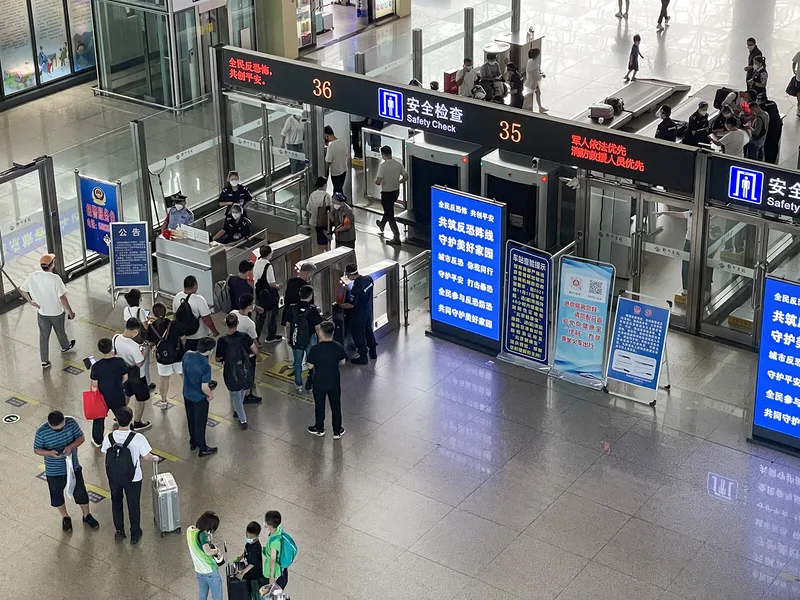
Expect checks at more than airports
Many first-time visitors expect airport security, but they may not expect similar checks at railway stations, metro entrances, museums, and popular attractions. The details vary by city and venue, but the practical habit is the same: do not arrive at the entrance with everything packed in a way that is hard to scan or open.
For a broader overview of where checks appear and how to prepare bags, timing, liquids, power banks, and large items, Jiangmi Travel's guide to security checks during China travel is a useful reference before a first trip.
Keep the day bag easy to open
A day bag should be compact and organized. If it is packed like a small suitcase, security checks take longer. Loose cables, snacks, medicine, umbrellas, power banks, documents, and small pouches can become messy when the group needs to move quickly.
Keep the items most likely to matter near the top or in known sections. Passports, phone, power bank, medicine, and any important notes should be reachable without unpacking the whole bag. This is especially useful when the group is moving through a railway station or attraction entrance at a busy time.
The practical packing side connects with what to keep in your day bag during a China trip. A good day bag supports checks, transport, weather, payments, and personal needs without becoming too heavy.
Give power banks and batteries a clear place
Power banks are common travel items, but they should not be buried at the bottom of the bag. Keep them in a place where they can be removed or checked if needed. The label should be readable, and the cable should be separate enough that the bag does not become tangled.
This is not only about passing a check. It is also about keeping the phone useful after the check. Travelers often use the phone heavily at stations and attractions, so power planning and security-check planning belong together.
Our earlier post on keeping your phone useful through a full China travel day explains why battery, cable, offline notes, and payment access should be prepared before leaving the hotel.
Do not bury passports or reservation details
Some travel days involve both security checks and identity or reservation checks. Railway stations, museums, and popular attractions may require passports, booking details, time slots, or real-name entry information. If those details are stored deep inside a suitcase or hidden in an app that is hard to open, the group can lose time at the entrance.
Keep passports secure but reachable. Save reservation details in screenshots or offline notes. If traveling as a family or group, each traveler should know where their own document is, and at least one other person should understand the overall document plan.
Plan popular attractions as entry systems
A popular attraction is not only the attraction itself. It may include an entrance queue, ticket or reservation check, passport check, security scan, last-admission rule, route inside the site, and the exit plan afterward. Travelers who only plan the sightseeing time may underestimate the full entry process.
For museums and major attractions, Jiangmi Travel's guide to planning museum and popular attraction visits in China covers reservations, passport rules, time slots, security checks, last admission, holiday crowds, and backup planning.
Use buffer time at the entrance, not only in transit
Travelers often add buffer time for traffic or metro transfers but forget the entrance itself. If the group reaches a museum, railway station, or attraction only a few minutes before a fixed time, even a normal queue can feel stressful.
Build a small buffer before the entry point. That gives the group time to find the correct gate, organize documents, pass the check, use the restroom, and settle before the main activity starts. This is especially important during holidays, weekends, school breaks, hot weather, or rainy days.
Separate everyday items from sensitive items
Everyday items such as tissues, snacks, water, umbrellas, medicine, and chargers should be easy to identify. If a bag is cluttered, a routine question can become slower than necessary. Clear pouches help, but too many small pouches can create the same problem in another form.
Travelers should also think about what not to bring for the day. If an item is not needed and may slow the check, leave it at the hotel. This is most relevant for large bottles, oversized tools, bulky shopping bags, or anything that creates uncertainty at an entrance.
Make one person responsible for timing, not all documents
In a group, one person often becomes the planner. That can help with timing, but it should not mean one person carries every passport, ticket, phone note, and support contact. If that person is busy answering a question, helping a child, or checking the route, the whole group can stall.
A better setup is shared responsibility. One person watches timing. Each traveler keeps their own passport secure. Another person knows where support contacts and hotel details are saved. This makes the group more resilient at busy entry points.
For the support-contact side, keeping help contacts ready during a China travel day explains how to keep hotel details, local contacts, insurance notes, and group information easy to reach.
Know when to simplify the plan
Security checks are usually quick, but they are one more moving part. If the day already includes long transport, bad weather, tired travelers, a timed entry, and a dinner reservation, the entrance process can become the point where the schedule starts to feel too full.
If the day is tight, simplify somewhere else. Choose one major attraction instead of two, arrive earlier, move a meal later, or drop a low-priority stop. A smoother entry often matters more than squeezing in one more place.
Bottom line
Security checks in China are easiest when travelers treat them as a normal part of the day. Keep the day bag organized, place power banks and documents where they can be reached, save reservation details offline, and leave a little time before stations, museums, and popular attractions.
With those habits, security checks become a routine step instead of the moment that slows down the whole travel day.


Comments
Post a Comment