How to Prepare Chinese Address Cards for Smoother Daily Travel in China
A correct address is one of the most useful travel tools in China. It helps at a hotel front desk, when meeting a driver, while finding a metro entrance, and when asking for help after a long day. Yet many travelers keep the address only in a booking email, a map app, or a message thread that becomes difficult to find when the phone is low on battery or the connection is unreliable.
A simple address card solves much of that problem. It does not need to be fancy. The point is to keep the Chinese address, the place name, and the next practical detail together in a format that can be shown quickly, copied easily, or handed to someone else in the group.
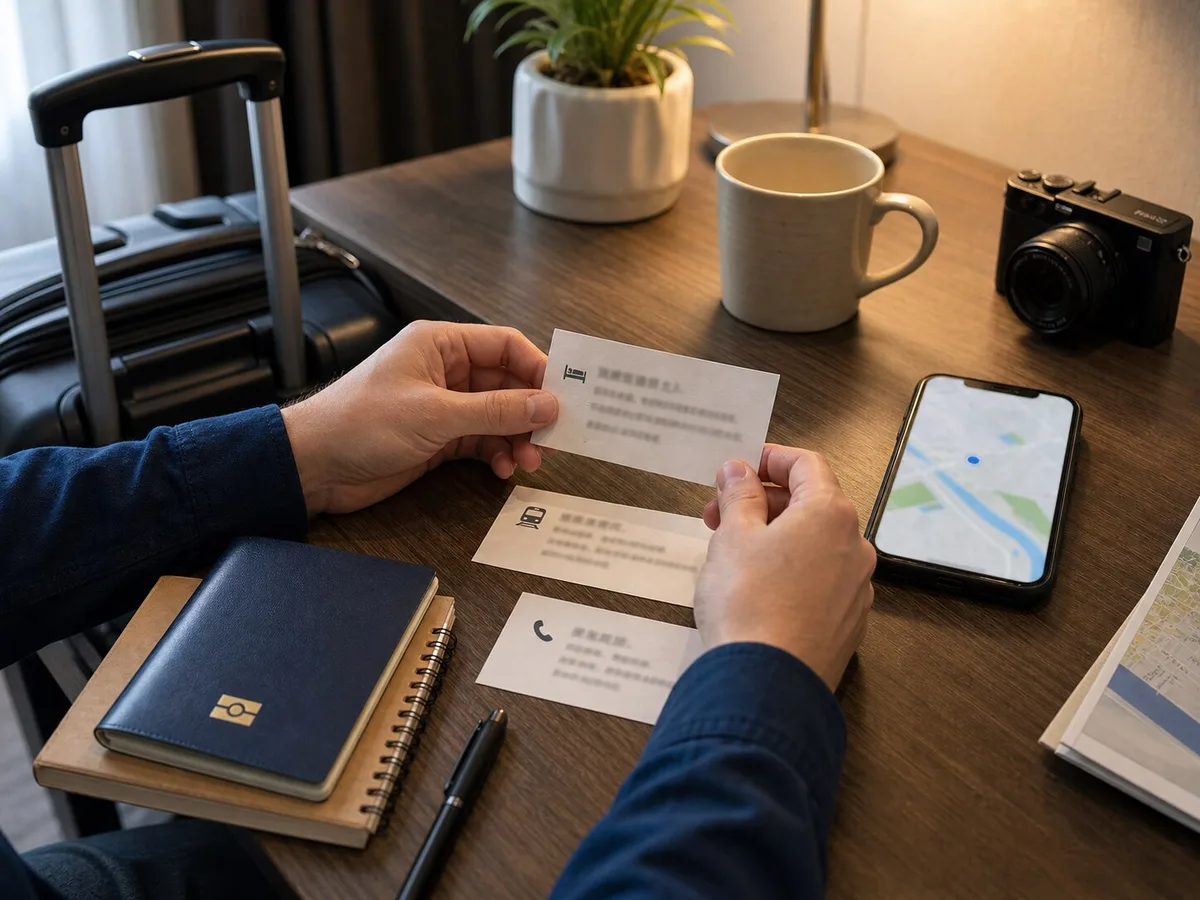
Prepare the address before the moment you need it
The least convenient time to search for an address is when the group has just landed, is standing beside a road with luggage, or is trying to leave a busy attraction before the weather changes. Prepare the key addresses while the details are easy to check: before departure, at the hotel in the evening, or during a quiet break.
Start with the first hotel, then add any later hotels, airports, railway stations, meeting points, major attractions, and the final departure point. For each place, keep the Chinese name and full Chinese address together. An English name can be useful for the traveler, but the Chinese version is usually the practical part to show.
Keep one short version and one full version
A short version is for quick handoffs. It might include the hotel name in Chinese, the district, and a recognizable nearby landmark. A full version is for booking a ride, checking a route, or showing a front desk. It should include the complete Chinese address and any helpful details such as building number, terminal, station entrance, or gate.
Do not turn the card into a long trip document. If it takes several screens to find the useful line, it is no longer doing its job. Put the key information at the top and keep optional details below it.
Make the address easy to show, not only easy to read
Travelers often make notes that are perfect for themselves but awkward to share. Tiny text, mixed languages, cropped screenshots, and a dozen similar-looking pins can slow down a simple interaction. Create a clean note or screenshot with the Chinese text visible at a comfortable size.
For a hotel, the most useful view may include the Chinese hotel name, full address, and a map pin. For a railway station or airport, add the correct terminal, departure hall, or entrance when that information is known. For a restaurant or attraction, the place name and address are usually enough.
Keep the card available offline
An address card should work even when the traveler does not have a strong connection. Save it as an image in the phone gallery, in an offline note, or in a document that is available without logging in again. Avoid relying on a single browser tab or a message thread that may be buried under newer messages.
This belongs in the same preparation habit as saving the right things on your phone before a China trip. Addresses, hotel confirmations, passports, transport details, and emergency notes are most valuable when they can be found in seconds.
Use addresses to make rides and pickups clearer
A saved address is especially helpful when using taxis or ride-hailing. The driver may need a precise destination, and the traveler may need a clear pickup point rather than a broad landmark. Check the destination before confirming the ride, and keep the address card open until the journey has started.
If the group is leaving a large hotel, railway station, or attraction, write down the pickup side or gate when possible. A correct destination does not always guarantee that both sides are standing in the same place. The practical movement habits in using taxis and ride-hailing during a China travel day are much easier when the key address and pickup point are already prepared.
Give every traveler access to the core addresses
One person should not be the only holder of every hotel and route detail. Phones run low, people separate briefly in a museum, and the person carrying the information may be busy checking in or helping with luggage. Share the core address cards with the other adults in the group and keep a small printed version when it makes sense.
At minimum, each traveler should be able to show the current hotel address and know how to reach a support contact. The same shared-responsibility approach appears in keeping help contacts ready during a China travel day: useful information works better when more than one person can reach it.
Refresh the addresses whenever the plan changes
Address cards are not a one-time pre-trip task. Update them when the hotel changes, a flight moves to another terminal, a train station changes, or the group chooses a different meeting point. Delete or clearly label old versions so that no one shows yesterday's hotel address by mistake.
Before leaving each hotel, check the next night's address and the next transport step. This two-minute habit reduces the chance of discovering a missing detail while carrying bags through a crowded station.
Keep privacy in mind
An address card is meant to be shown when needed, not displayed all day. Keep passport numbers, payment details, full travel schedules, and other sensitive information out of the shared version. The address, place name, and a simple contact method are usually enough for everyday movement.
For children or travelers who may get separated, a small card with the current hotel address and one emergency contact can be useful. Keep it simple, current, and private.
Bottom line
Chinese address cards are a small preparation step with a large daily payoff. Save the Chinese name and full address for the places that matter, keep them readable and offline, share the essential cards within the group, and refresh them whenever the plan changes.
When an address is ready to show, a hotel arrival, pickup, station transfer, or request for help becomes much less complicated.


Comments
Post a Comment